By Muhammad Awais. Prices reviewed October 2026.
Gas line installation cost for a typical new line to one appliance runs $380 to $1,410 nationally, with $670 as the typical figure, which blends the averages published by Fixr and Angi. Installers price the pipe itself by the foot, at $15 to $25 per linear foot installed, so the length of pipe between the appliance and the meter or nearest branch decides most of the bill. Permits, pressure tests, meters and trenching are added on top when the job needs them.
| Gas line item | Low | Typical | High |
|---|---|---|---|
| Gas line installation, typical job | $380 | $670 | $1,410 |
| Installed line, per linear foot | $15 | $20 | $25 |
| Underground trenching, per linear foot | $4.50 | $9 | $13.50 |
| New gas meter | $275 | $395 | $515 |
| Permit | $75 | $190 | $300 |
| Pressure test | $75 | $115 | $150 |
| New service line from the street | $2,000 | $6,000 | $10,000 |
Price by appliance
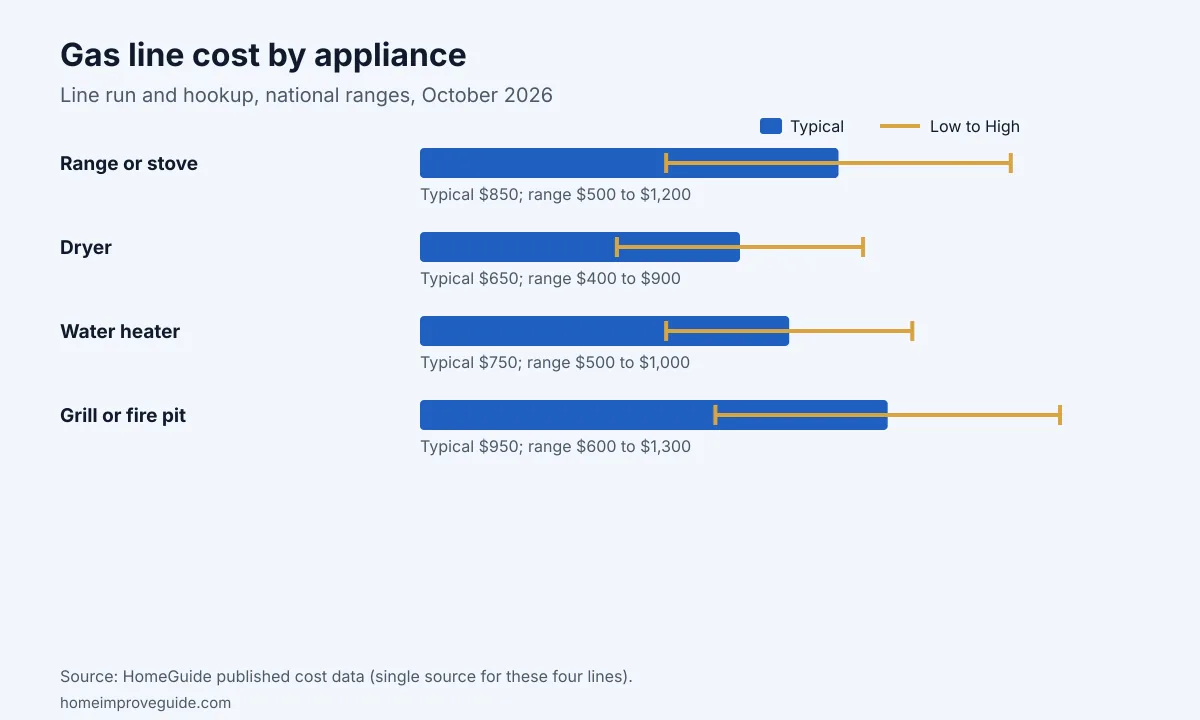
HomeGuide prices a complete line and hookup for each common gas appliance. These rows include the pipe run, the shutoff valve, the connector and the test:
| Appliance | Low | Typical | High |
|---|---|---|---|
| Range or stove | $500 | $850 | $1,200 |
| Dryer | $400 | $650 | $900 |
| Water heater | $500 | $750 | $1,000 |
| Outdoor grill or fire pit | $600 | $950 | $1,300 |
Outdoor lines cost the most because they leave the house, often run underground and need materials rated for burial. A range or water heater near the existing gas piping sits at the low end of its row; one at the far end of the house, or upstairs, sits near the top.
Cost by length of run
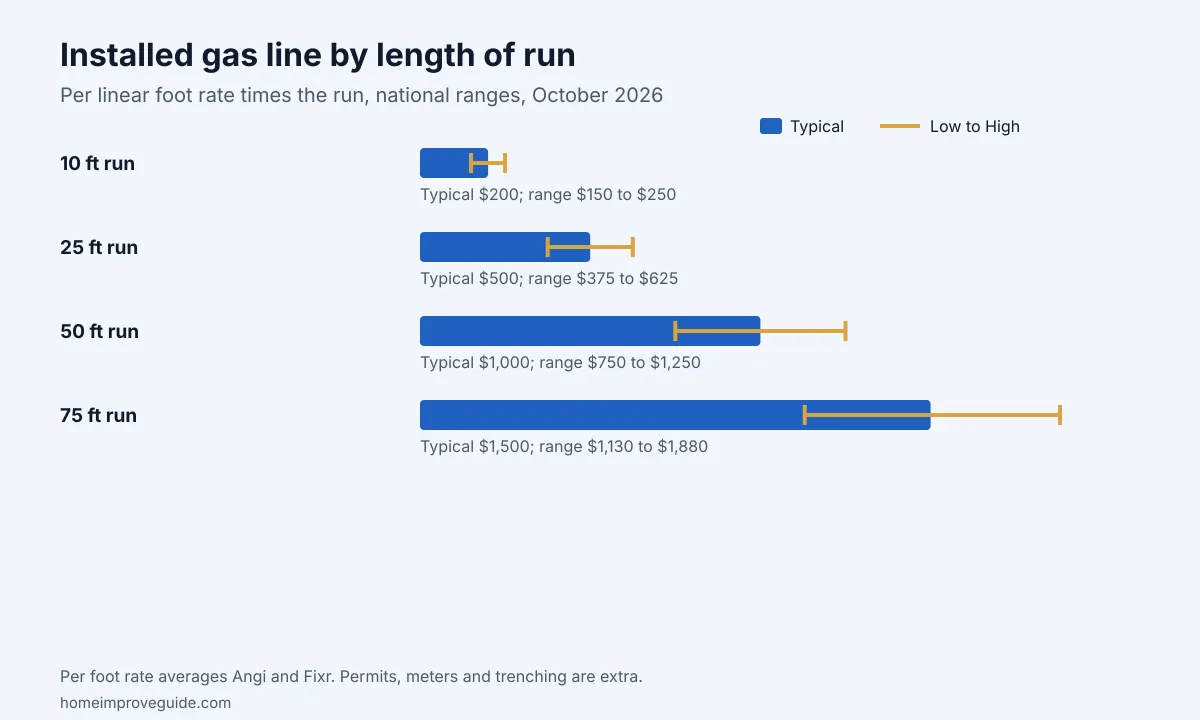
At the per foot rate, the run alone works out as follows, before permit, test and any meter or trench:
| Run length | Low | Typical | High |
|---|---|---|---|
| 10 ft | $150 | $200 | $250 |
| 25 ft | $375 | $500 | $625 |
| 50 ft | $750 | $1,000 | $1,250 |
| 75 ft | $1,130 | $1,500 | $1,880 |
Pipe material shifts the per foot price. Flexible corrugated stainless steel tubing, known as CSST, threads through walls with few fittings and installs quickly. Black iron pipe costs more in labor because every length is cut, threaded and joined, and plastic polyethylene pipe is used only underground outside the house. CSST must be bonded to the electrical grounding system to protect it from lightning damage, a step the inspector checks.
Worked example: a gas range 30 feet from the meter
An owner replaces an electric range with a gas model, and the kitchen sits 30 feet of pipe away from the nearest gas branch.
- Pipe run, 30 feet at the per foot rate: about $600 typical.
- Permit: $75 to $300.
- Pressure test: $75 to $150.
- Total: $600 to $1,200, with $905 typical.
The range itself, a new electrical outlet for its igniter and any cabinet changes are outside this figure.
Meters, service lines and the utility
A house with no gas service needs a line from the street main and a meter before any appliance can be connected. The utility usually installs the meter and owns everything up to it, and many utilities charge for the service line by distance, sometimes with a free allowance. For a new service line off the street main, HomeGuide gives $2,000 to $10,000, a single source figure. A new meter on an existing service runs $275 to $515 where the utility charges for it. Adding several appliances can also outgrow the meter or the main pipe size, which the installer checks with a load calculation.
Switching an appliance to gas
Converting an electric range, dryer or water heater to gas involves more than the pipe. Gas ranges need a standard outlet for the igniter and clock, while the old 240 volt range circuit can stay in the wall or be capped. Gas dryers need a vent to the outside, just like electric ones, plus the gas connection. Gas water heaters add the largest extra cost, since they need a flue or a power vent, combustion air and sometimes a larger pipe to carry the demand. Houses on propane follow the same steps with a tank and regulator outside instead of a utility meter, and appliances set up for natural gas need a conversion kit before they can burn propane. An installer who looks at the whole list before quoting avoids a second visit and a second permit.
Price drivers
- Run length and route. Every foot, elbow and wall crossing adds labor.
- Access. Open basements and crawl spaces are quick; finished ceilings and slab houses are slow.
- Outdoor work. Trenching runs $4.50 to $13.50 per linear foot, and buried lines need the locate service called first.
- Pipe size. High demand appliances and long runs need larger pipe to keep pressure up.
- Code upgrades. Sediment traps, shutoff valves and bonding may be needed at older connections.
- Region. The typical job of $670 is about $838 where labor costs 25 percent more than the national level and about $570 where it costs 15 percent less.
Only a licensed installer
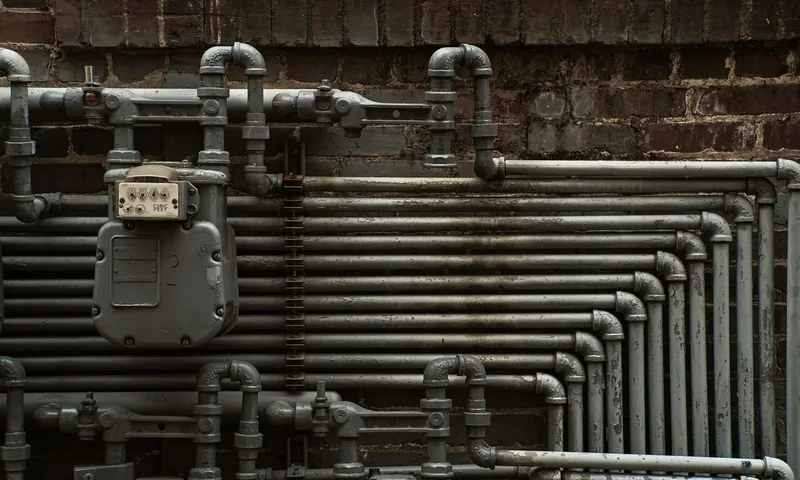
Gas piping is not a do it yourself job. Most states and cities limit it to licensed plumbers or certified gas fitters, require a permit and an inspection, and the utility may refuse to turn on service until the line passes. A leak test with the system under pressure is part of every proper installation. Anyone who smells gas should leave the house, avoid switches and flames, and call the gas utility or 911 from outside.
Costs outside a gas line quote
- The appliance itself and any venting it needs.
- Electrical outlets for igniters, controls or blowers.
- Drywall and finish repair where pipe passes through walls.
- Utility charges for service lines and meters.
- Lawn and paving repair after trenching.
- Removal of old oil tanks or electric equipment being replaced.
Gas line quote checklist
- Route and length of the run, with the pipe material and size.
- Shutoff valves and sediment traps at each appliance.
- CSST bonding, where flexible pipe is used.
- Permit, inspection and the pressure test.
- Trenching depth and backfill for outdoor lines.
- Utility coordination for meters or service changes.
- Wall and floor repair after the work.
- The installer’s license and the warranty on the work.
Cost data note
Gas line rates come from HomeGuide, Angi, Fixr and Forbes Home, two publishers per line where both cover the item, as described on the methodology page. The appliance rows and the service line rest on HomeGuide alone. HomeGuide shows no date on its gas line page, so it carries the site’s reading date. Prices stand as of October 2026, inside a 3 month review cycle.
Frequently asked questions
How much do installers charge to run a gas line?
A typical new gas line costs $380 to $1,410, with $670 typical. Installed pipe runs $15 to $25 per linear foot.
How much is a gas line for a stove?
A line and hookup for a range or stove costs $500 to $1,200, depending on the distance from the existing gas piping.
Does a gas line need a permit?
Almost always. Permits run $75 to $300, and the inspection confirms the pressure test and the connections.
What does a gas pressure test cost?
A standard pressure test costs $75 to $150, and it is part of every new installation.
Can a plumber install a gas line?
Licensed plumbers install gas lines in many states, sometimes with an added gas endorsement. Others require a certified gas fitter.
Related home systems guides
Water and drain work is priced in the plumber cost guide, and replacing old supply pipes in the repiping guide. Circuits for igniters and appliances are covered in the electrician cost guide, and service changes for a large electric load in the panel upgrade guide. The guides index page lists every topic.