By Muhammad Awais. Prices reviewed October 2026.
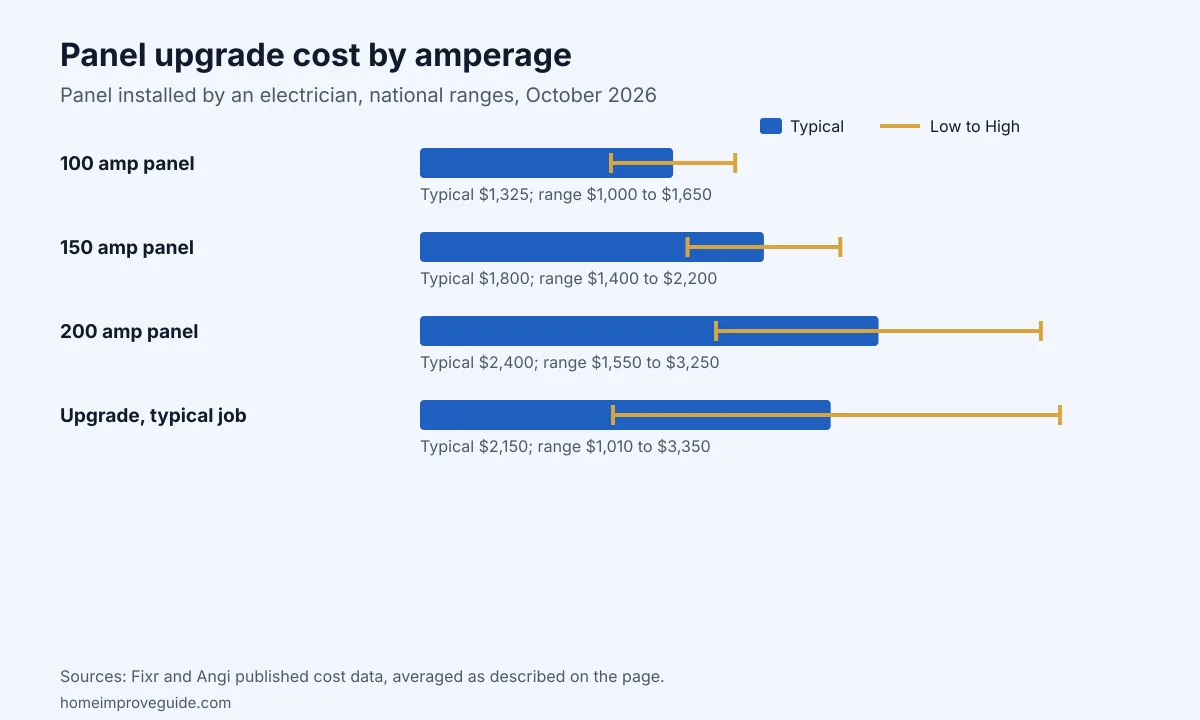
Electrical panel upgrade cost runs $1,010 to $3,350 for a typical job nationally, with $2,150 typical; that figure blends the averages Fixr and Angi publish. The amperage of the new panel is the main driver. A 200 amp panel, the size most houses move to, costs $1,550 to $3,250 installed by a licensed electrician, and smaller 100 and 150 amp panels cost less.
| Panel size | Low | Typical | High |
|---|---|---|---|
| 100 amp panel, installed | $1,000 | $1,325 | $1,650 |
| 150 amp panel, installed | $1,400 | $1,800 | $2,200 |
| 200 amp panel, installed | $1,550 | $2,400 | $3,250 |
A 400 amp job is a service upgrade, not a panel swap alone. Fixr puts the full upgrade at $8,000 to $12,000 because it includes substantial new wiring, while panel only figures run lower, so an itemized quote matters on this job.
Why houses outgrow their panels
Many older homes were built with 60 or 100 amp service, which was enough for lights, a refrigerator and a few small appliances. Central air, electric ranges, hot tubs, heat pumps and electric vehicle chargers all draw heavily, and adding them can push the total load past what the panel and the service wires can carry. The signs are familiar: breakers that trip when two appliances run together, lights that dim when a motor starts, no free spaces for new circuits, and a reliance on tandem breakers or extension cords. Some older panel brands with a record of breakers that fail to trip are replaced on sight by many electricians and insurers, even when the amperage is adequate.
What an upgrade involves
- The electrician calculates the house load and confirms the new amperage with the utility.
- A permit is pulled, and the utility schedules a disconnect.
- Power is cut, the old panel comes out and the new panel goes in, often with a new meter base and service entrance cable.
- Each circuit is moved to the new panel, labeled and fitted with the breaker type current code calls for.
- Grounding and bonding are brought up to code, which can include new ground rods.
- The inspector checks the work and the utility restores power, usually the same day.
Most panel swaps take a full day with the power off for several hours. Larger upgrades that replace the service drop or the underground lateral need more coordination with the utility.
Add ons that often join the job
| Item | Low | Typical | High |
|---|---|---|---|
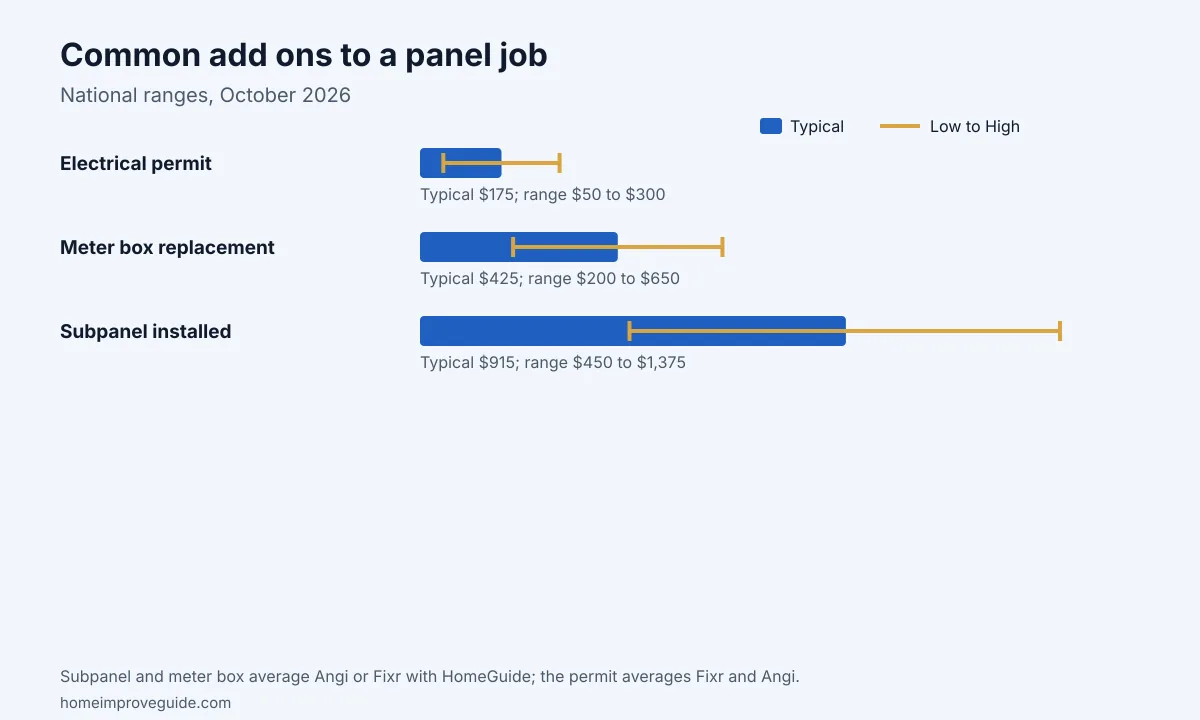
| Subpanel, installed | $450 | $915 | $1,375 |
| Meter box replacement | $200 | $425 | $650 |
| Electrical permit | $50 | $175 | $300 |
A subpanel adds circuits in a garage, a workshop or an addition without moving the main panel. A meter box replacement is common when the old base is rusted or rated below the new service. Permit fees follow the city or county, and most electricians include them in the quote.
Worked example: moving to 200 amps
A 1960s house with a 100 amp panel needs room for a heat pump and an electric vehicle charger. The electrician quotes a 200 amp panel with a new meter base and the permit:
- 200 amp panel installed: $1,550 to $3,250, typical $2,400.
- Meter box replacement: $200 to $650, typical $425.
- Permit: $50 to $300, typical $175.
- Total: $1,800 to $4,200, with $3,000 typical.
New circuits for the heat pump and the charger are priced separately, since their cost depends on wire runs and breaker sizes.
Planning ahead for new loads
An upgrade is cheapest when it is sized once. Owners who expect to add an electric vehicle charger, a heat pump, an induction range, a hot tub or solar panels within a few years should list all of them before the load calculation, since the electrician sizes the panel and its spaces to that list. Solar installations in particular may need a panel with a busbar rating that allows the extra backfeed, and some utilities require a specific meter base for it. A larger panel with spare spaces costs little more than a full one and saves a second permit and a second day without power later.
Price factors
- Service wires. When the overhead drop or underground feed is too small, the utility and the electrician must replace it, which raises the price sharply.
- Panel location. Moving a panel out of a closet or bathroom to meet code adds wiring and wall repair.
- Grounding. Old houses often need new ground rods and bonding to water and gas pipes.
- Aluminum branch wiring. Some houses from the 1960s and 1970s need special connectors for each aluminum circuit.
- Breaker type. Current codes call for arc fault and ground fault protection on many circuits, and those breakers cost more.
- Region. A typical 200 amp panel at $2,400 comes to about $3,000 in the higher cost band (25 percent over) and about $2,040 in the lower cost band (15 percent under).
No DIY on the service panel
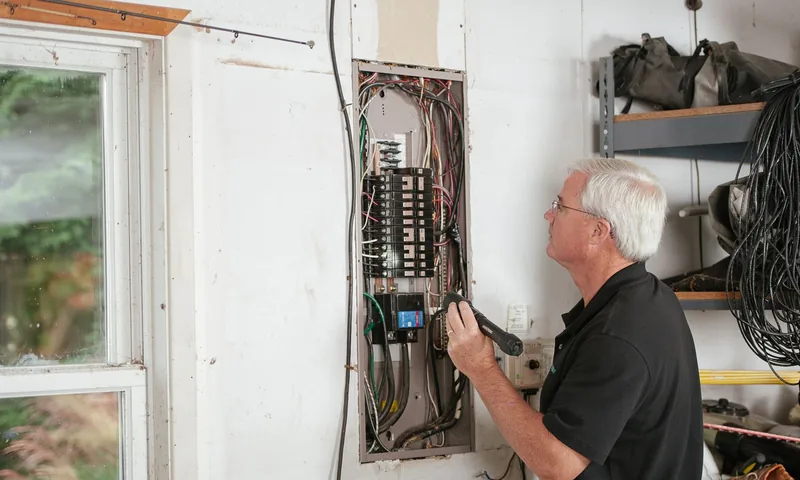
A panel upgrade is not an owner project. The service conductors above the main breaker stay energized even with the main switch off, and only the utility can cut them. Most jurisdictions require a licensed electrician, a permit and an inspection, and an uninspected panel can cause trouble with insurers and buyers. Owners can help the job go smoothly by clearing space around the panel, listing every appliance they plan to add, and labeling the circuits they know.
Outside the quoted price
- New circuits for added appliances, chargers or rooms.
- Utility work on the service drop, lateral or transformer.
- Drywall and paint repair around a relocated or larger panel.
- Trenching for an underground service upgrade.
- Correcting old wiring problems found during the work.
- Whole house surge protection, unless listed.
Panel upgrade quote checklist
- New panel amperage, brand and number of spaces.
- Meter base and service entrance cable replacement, if included.
- Grounding and bonding work.
- Breaker types for each circuit, including arc fault and ground fault.
- Permit, inspection and utility coordination.
- Expected hours without power.
- Wall repair around the panel.
- Warranty on labor and parts.
Cost data note
Panel prices average Fixr and Angi for the amperage lines and the permit, and pair each of them with HomeGuide for the subpanel and meter box, as set out on the methodology page. The per job Typical is the mean of Fixr’s stated average and Angi’s average for a panel replacement; the amperage rows use midpoints. No 400 amp line appears because the two publishers price different scopes for that size. The set dates from October 2026; its next full check is due within 3 months.
Frequently asked questions
What does an electrical panel upgrade cost?
A typical upgrade costs $1,010 to $3,350 nationally, with $2,150 typical. The new panel’s amperage and any service wire changes decide where a job lands.
How much is a 200 amp panel upgrade?
A 200 amp panel costs $1,550 to $3,250 installed, with $2,400 as the midpoint, before new circuits or utility work.
Does a panel upgrade need a new meter?
Not always. A meter base rated for the new service can stay, but rusted or undersized bases are replaced, at $200 to $650.
How much does a subpanel cost?
A subpanel costs $450 to $1,375 installed, depending on its size and the distance from the main panel.
How long does a panel upgrade take?
Most panel swaps take one day, with the power off for several hours. Jobs that change the utility service can take longer to schedule.
Related electrical and home systems guides
The electrician cost guide prices hourly rates and smaller electrical jobs. Fuel lines for a gas range or water heater are priced in the gas line installation guide, and plumbing service calls are covered in the plumber cost guide. Browse the guides page for every trade.