By Muhammad Awais. Prices reviewed October 2026.
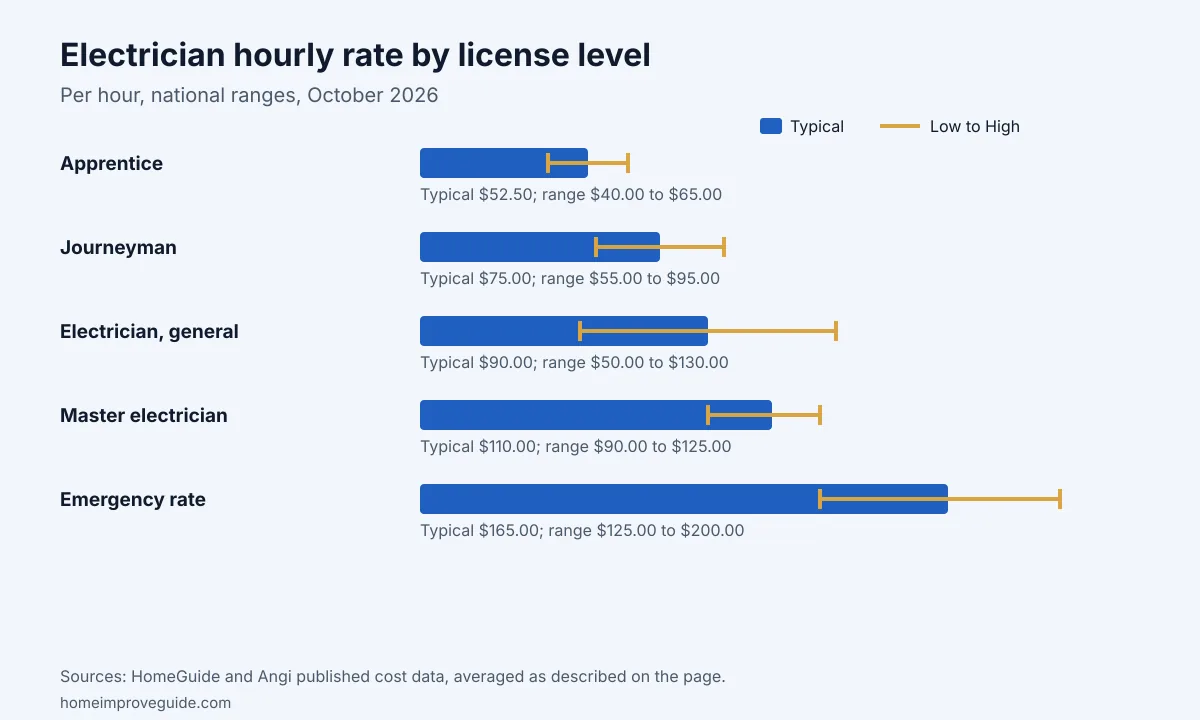
Electrician cost begins with an hourly rate of $50 to $130 nationally, with $90 as the midpoint of the ranges HomeGuide and Angi publish. Most visits open with a service call of $100 to $200 that covers the first hour. A typical residential electrical job comes to $165 to $535, and Angi puts its average at $350. Rates climb with the electrician’s license level and with calls outside business hours.
| Electrician charge | Low | Typical | High |
|---|---|---|---|
| Electrician, per hour | $50 | $90 | $130 |
| Apprentice, per hour | $40 | $52.50 | $65 |
| Journeyman, per hour | $55 | $75 | $95 |
| Master electrician, per hour | $90 | $110 | $125 |
| Service call, first hour included | $100 | $150 | $200 |
| Emergency, per hour | $125 | $165 | $200 |
| Typical electrical job | $165 | $350 | $535 |
Apprentice, journeyman and master rates
Electrical licensing runs in steps. Apprentices learn on the job under supervision and bill $40 to $65 an hour. Journeymen hold a state license after years of training and an exam, and charge $55 to $95. Master electricians, at $90 to $125, can design systems, pull permits and supervise others. A two person crew of a journeyman and an apprentice often finishes a job faster than one electrician working alone, even though the hourly total looks higher.
Prices for common electrical jobs
| Job, installed | Low | Typical | High |
|---|---|---|---|
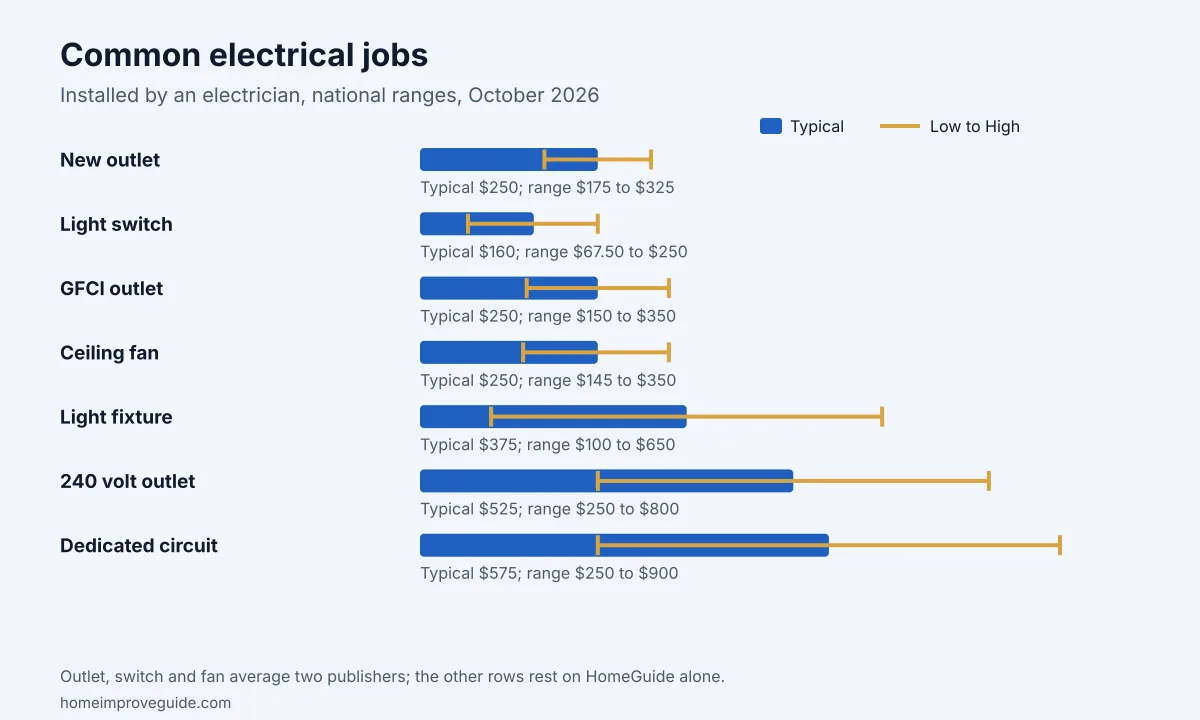
| New outlet | $175 | $250 | $325 |
| Light switch | $67.50 | $160 | $250 |
| GFCI outlet, new | $150 | $250 | $350 |
| Ceiling fan | $145 | $250 | $350 |
| Light fixture | $100 | $375 | $650 |
| 240 volt outlet | $250 | $525 | $800 |
| Dedicated circuit | $250 | $575 | $900 |
The outlet, switch and fan rows average both publishers. The fixture, GFCI, 240 volt and dedicated circuit rows come from HomeGuide alone. A dedicated circuit for a range, dryer, air conditioner or vehicle charger carries the widest range because the wire run from the panel decides the price, and a panel without spare spaces may need an upgrade first.
Worked example: three small jobs on one visit
A homeowner books one visit to add a kitchen outlet, replace a failing light switch and hang a ceiling fan where a light fixture already has a fan rated box.
- New outlet: $175 to $325.
- Light switch: $67.50 to $250.
- Ceiling fan: $145 to $350.
- Total for the three: $388 to $925, with $660 typical.
Grouping small jobs pays off because each separate visit would carry its own service call. Many electricians keep a running list for customers and schedule the work for a single morning.
How electricians price their work
Hourly billing suits troubleshooting, where nobody knows in advance how long it will take to find a dead circuit or a loose connection. Flat pricing is common for defined tasks such as installing a fixture, adding an outlet or swapping a panel, and many firms publish a price list. Larger projects, such as rewiring a room or wiring an addition, are bid as a whole with materials, labor and the permit included. Every method should end in a written quote before work begins.
What raises an electrical bill
- Wall access. Fishing wire through finished walls and ceilings takes longer than open framing, and the patches may need a drywall finisher.
- Old wiring. Knob and tube, ungrounded circuits and aluminum branch wiring add time and may trigger upgrades.
- Code requirements. New work often needs arc fault or ground fault protection, tamper resistant outlets and boxes rated for the load.
- Permits. Many jurisdictions require a permit for new circuits, and the inspection adds a visit.
- Timing. Emergency calls run $125 to $200 an hour.
- Region. The typical job of $350 rises to about $438 where costs run 25 percent high and falls to about $298 where they run 15 percent low.
Electrician, handyman or owner
Replacing a switch plate, a light bulb socket or a plug in fixture is small work, and in some states owners may do minor electrical work in their own home under a permit. Adding circuits, working in the panel, and wiring for appliances, hot tubs or chargers belong with a licensed electrician in nearly every jurisdiction. Handymen are often barred from electrical work beyond very minor swaps. Mistakes carry real risks: shock, fire hidden in a wall, failed inspections when the house is sold and denied insurance claims. Turning off the breaker and confirming the circuit is dead with a tester is the first step for any work at all.
Checking a license before hiring
Every state licenses electricians, and most publish a free online lookup by name or license number. A check takes minutes and confirms that the license is active, what level it covers and whether any complaints or disciplinary actions are on file. Electrical contractors should also carry general liability insurance and, where they have employees, workers compensation coverage, and the insurer can supply a certificate on request. Reviews help with punctuality and cleanliness, while the license and insurance answer the questions that matter if something goes wrong. A written quote that names the license number, lists the permit and describes the work in plain terms is a good sign. Requests for full payment up front, refusal to pull a permit for work that needs one and cash only pricing are reasons to keep looking.
Signs it is time to call
Some electrical symptoms can wait for a convenient appointment, and some cannot. Warm or discolored outlets, a burning smell, buzzing from a panel and breakers that trip again right after a reset call for a prompt visit, since they point to overheating. Flickering lights on one circuit, dead outlets and a two prong outlet where a grounded plug is needed are routine service calls.
Not in an electrician’s quote
- Fixtures, fans and appliances chosen by the owner.
- Drywall, plaster and paint repair after wiring is fished.
- Panel upgrades needed to make room for new circuits.
- Utility work on the meter or the service.
- Permit fees, when billed separately.
- Low voltage work such as networking and alarms, often done by other trades.
Electrician quote checklist
- Billing method: hourly, flat rate or project bid.
- The license level of the person doing the work.
- Service call fee and what it covers.
- Materials listed with brands and ratings.
- Permit and inspection responsibility.
- Repair of openings in walls and ceilings.
- After hours rate and when it applies.
- Warranty on workmanship and parts.
Cost data note
Hourly rates and the common jobs average HomeGuide and Angi wherever both price the same item, through the steps on the methodology page. The typical job rests on Angi alone, and four job rows rest on HomeGuide alone. Neither publisher dates its electrician page, so both carry the site’s October 2026 reading date, with a fresh look at every 3 month review.
Frequently asked questions
How much do electricians charge per hour?
Electricians charge $50 to $130 an hour nationally, with $90 as the midpoint. Master electricians charge $90 to $125.
What is an electrician’s service call fee?
A service call costs $100 to $200 and usually includes the first hour on site.
What is the price of adding an outlet?
A new outlet costs $175 to $325 installed. A 240 volt outlet for a large appliance costs $250 to $800.
What does a ceiling fan installation cost?
An electrician installs a ceiling fan for $145 to $350 where a rated box exists. A new box or a new circuit adds to that.
Is it cheaper to hire an apprentice?
Apprentices bill less, $40 to $65 an hour, but they must work under a licensed electrician, who also bills for the job.
Related guides for home systems
Larger electrical work is priced in the panel upgrade guide. The plumber cost guide covers plumbing rates and service calls, and the gas line guide prices fuel lines for appliances. Every topic is listed under guides.