By Muhammad Awais. Prices reviewed October 2026.
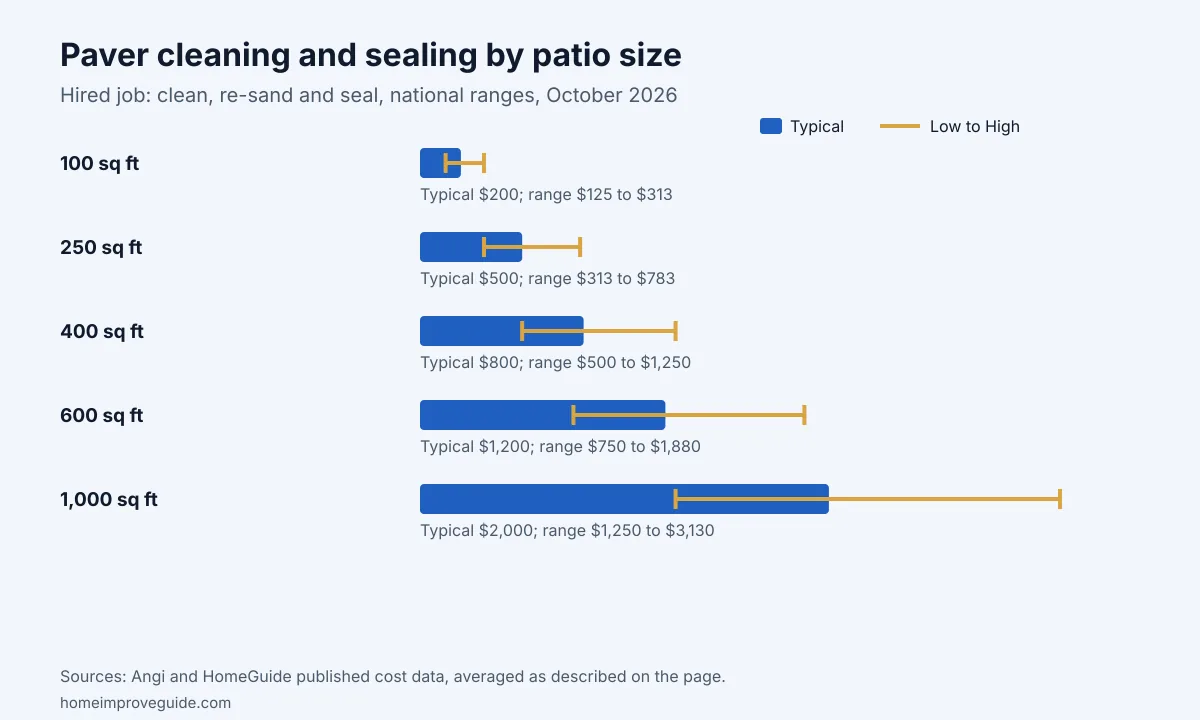
Sealing pavers professionally costs $1.25 to $3.13 per square foot for the usual package of cleaning, re-sanding the joints and applying sealer, with $2.00 typical in October 2026. On a 400 square foot patio, the paver sealing cost comes to $500 to $1,250, about $800 typical. Owners who do the work buy water based sealer at $41 to $80 a gallon, which covers about 200 square feet, plus polymeric joint sand, which on many patios is the larger material bill.
| Patio or driveway area | Low | Typical | High |
|---|---|---|---|
| 100 sq ft | $125 | $200 | $313 |
| 250 sq ft | $313 | $500 | $783 |
| 400 sq ft | $500 | $800 | $1,250 |
| 600 sq ft | $750 | $1,200 | $1,880 |
| 1,000 sq ft | $1,250 | $2,000 | $3,130 |
What a sealing job includes
- The surface gets cleaned, usually with a surface cleaner attachment on a pressure washer, plus spot treatment for oil, rust and efflorescence. Cleaning alone runs $0.30 to $0.65 per square foot.
- Washed out joints get refilled, most often with polymeric sand that hardens when misted and resists weeds and ants.
- The pavers dry completely, often for a day or more, because sealer over damp pavers turns cloudy.
- Sealer goes on with a sprayer or roller in thin coats, and the area stays closed to foot traffic and cars until it cures.
Water based sealers give a natural or matte look and clean up with water. Solvent based sealers, at $32 to $55 a gallon, darken the pavers into a wet look and penetrate deeper, but they carry stronger fumes and higher fire risk during application.
Pricing the joint sand
Re-sanding is the part of the job most often underestimated. The paver sand calculator below counts 50 lb bags of polymeric sand for any area, using the coverage per bag in the site configuration.
Bedding sand to order
0.49 tons
Volume: 0.37 cu yd
| Paved area | 120.0 sq ft |
|---|---|
| Sand volume | 10.0 cu ft |
| Same sand in 50 lb bags | 20 bags |
| Item | Low | Typical | High |
|---|---|---|---|
| Bedding sand | $12 | $20 | $27 |
Planning estimate only, not a contractor quote. Prices are United States national ranges, updated October 2026. How these estimates are built
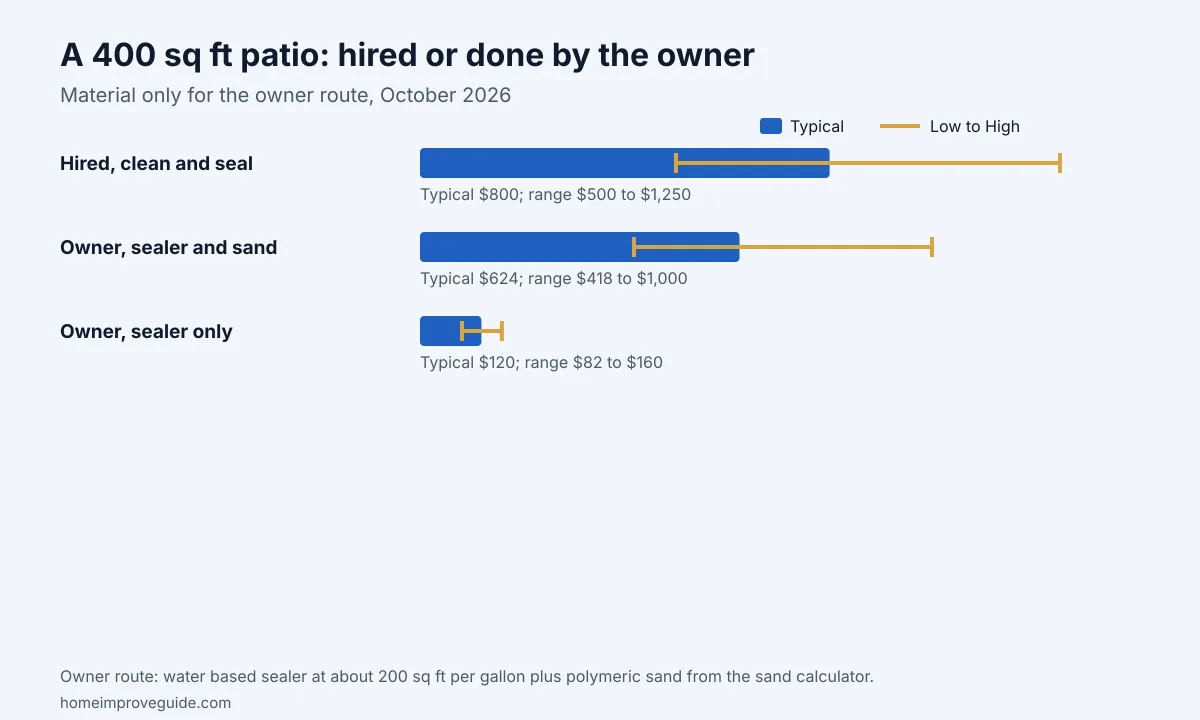
A 20 by 20 foot patio of 400 square feet takes 14 bags of polymeric sand at about 30 square feet per bag, which costs $336 to $840, with $504 typical. The sealer for the same patio, at about 200 square feet per gallon, is 2 gallons of water based product, or $82 to $160. An owner doing the work therefore spends about $418 to $1,000 on material, $624 typical, against $800 typical for a hired crew that brings its own equipment.
Cost factors that change the price
- Area. Small patios cost more per square foot because the crew’s setup and travel are spread over fewer feet. Large driveways land near the low end of the per foot range.
- Condition. Heavy oil stains, rust from furniture, white efflorescence and weeds in every joint add cleaning time and chemicals.
- Joint sand. Joints that are nearly empty take a full re-sand, while joints in good shape may need only topping up.
- Sealer type. A wet look solvent sealer and a matte water based sealer price differently and wear differently, and premium products last longer between coats.
- Stone type. Travertine, natural stone and tumbled pavers take more care than standard concrete pavers, and some stone needs a sealer made for its surface.
- Furniture and access. Moving heavy furniture, grills and planters off the surface, or working in a narrow side yard, adds labor time.
- Region. Prices shift by about 15 percent downward in lower cost states and about 25 percent upward in higher cost ones.
Hiring a crew or sealing without one
Paver sealing is one of the more approachable outdoor jobs for a homeowner with a free weekend and a run of dry weather. A rented pressure washer with a surface cleaner, a push broom for the sand, a garden sprayer or roller and the sealer itself are all the equipment needed. The material math above shows the owner route saves less than many expect, since the sand dominates, but the labor savings are real on large areas.
Crews earn their price on stained, neglected or very large surfaces, on natural stone, and where a solvent sealer is wanted. They also know how much water pressure the joints can take, which keeps the bedding sand under the pavers in place.
Mistakes that ruin a sealed surface
- Sealing damp pavers. Trapped moisture turns the sealer white or hazy, and stripping it costs more than the original job.
- Heavy coats. Thick sealer stays tacky, peels and becomes slippery when wet. Two thin coats beat one thick one.
- Washing too close. A pressure washer held near the joints blasts out sand and bedding, leaving loose pavers.
- Sealing over efflorescence. White salt deposits locked under sealer stay visible until the sealer is stripped.
- Leaving polymeric haze. Sand left on the paver faces hardens into a film when misted, so the surface gets blown clean first.
Paver sealing quote checklist
A written quote should describe each step, since cheap quotes often skip one.
- Square footage measured, and whether steps, borders and walls are included
- Cleaning method, water pressure and any stain or efflorescence treatment
- Joint sand type and whether joints get fully re-sanded or topped up
- Sealer brand, water or solvent base, finish look and number of coats
- Drying time before sealing and the plan if rain arrives
- Protection for lawns, plants, siding and doors against overspray
- How long the area stays closed to walking and to cars
- Expected years before the next coat, and any warranty on haze or peeling
When a professional is the better choice
Driveways that carry cars, large commercial areas, natural stone and pavers with old sealer that must be stripped are best left to an experienced paver care company. Solvent based sealers need ventilation, no ignition sources and protective equipment, which crews bring as standard. Loose, sunken or rocking pavers point to a base problem that sealing will not fix and that calls for relaying the area.
Cost data note
Hired sealing rates average two published national sources, one of them older than the other, following the rule set out on the methodology page. Sealer coverage comes from one source, and polymeric sand comes from the site’s paver sand prices. Prices are those of October 2026. A review every 3 months keeps them current, and local sealer prices can differ from national averages, especially for specialty products.
Frequently asked questions
What does professional paver sealing cost per square foot?
Hired cleaning, re-sanding and sealing costs $1.25 to $3.13 per square foot, with $2.00 typical. Cleaning alone costs $0.30 to $0.65 per square foot.
What does it cost to seal a 400 square foot patio?
A crew charges $500 to $1,250 for 400 square feet, with $800 typical. Doing it without a crew costs about $418 to $1,000 in sealer and polymeric sand.
How often should pavers be sealed?
Most sealed patios need a fresh coat every few years, sooner on driveways and in hot, sunny climates. Water beading on the surface is a sign the sealer is still working.
Is sealing pavers worth the money?
Sealing slows staining, fading and weed growth and helps polymeric joints last. On a patio that sees heavy use or cooking spills, it usually pays for itself in cleaning time.
Which is better, water based or solvent based sealer?
For a natural look with low odor and easy cleanup, the water based type suits most patios. Solvent based sealer gives a richer wet look and deeper penetration but needs more care during application.
Other paver and outdoor topics
The paver calculators size pavers, base and sand, and the sand calculator above covers both bedding and joint sand. Guides to walkway replacement, poured patio slabs and soft washing a roof cover related upkeep, and the guide catalog lists more.