A paver base calculator sizes the layer that decides whether a patio stays flat for decades or heaves after two winters. Concrete pavers sit on an inch of sand, and that sand sits on a compacted bed of crushed gravel, usually 4 or 6 inches thick. The tool takes the area and the finished base depth, works out the compacted volume, then adds a 20 percent compaction allowance to give the loose volume a supplier actually loads. The order comes out in tons, the unit most aggregate yards sell by, with a material price band per ton applied for the Low, Typical and High estimate.
Base gravel to order
2.40 tons
Loose volume: 1.78 cu yd
| Base area | 120.0 sq ft |
|---|---|
| Compacted volume in place | 1.48 cu yd |
| Loose volume to order, × 1.2 compaction | 1.78 cu yd |
| Weight at 1.35 tons per cu yd | 2.40 tons |
| Item | Low | Typical | High |
|---|---|---|---|
| Paver base gravel | $72 | $108 | $156 |
Planning estimate only, not a contractor quote. Prices are United States national ranges, updated October 2026. How these estimates are built
Tons, loose yards and compacted yards
The headline number is the weight to order. Gravel yards and stone suppliers price base by the ton, and a dump truck load is quoted the same way. The line under it gives the loose volume in cubic yards, which suits suppliers that sell by the yard.
Two volumes appear in the table. The compacted volume is the space the finished base fills under the patio. The loose volume is 1.2 times larger, because crushed gravel drops in height as a plate compactor packs it. The weight uses 1.35 tons per cubic yard of loose base, the planning density held in the site configuration. Material prices run $30 to $65 per ton, $45 typical, and the explanation of the estimating method covers how the region factor shifts that band.
Base volume formula, worked through
- Compacted volume (cu ft) = area × (depth in inches ÷ 12)
- Compacted volume (cu yd) = cubic feet ÷ 27
- Loose volume to order = compacted cubic yards × 1.2
- Tons = loose cubic yards × 1.35
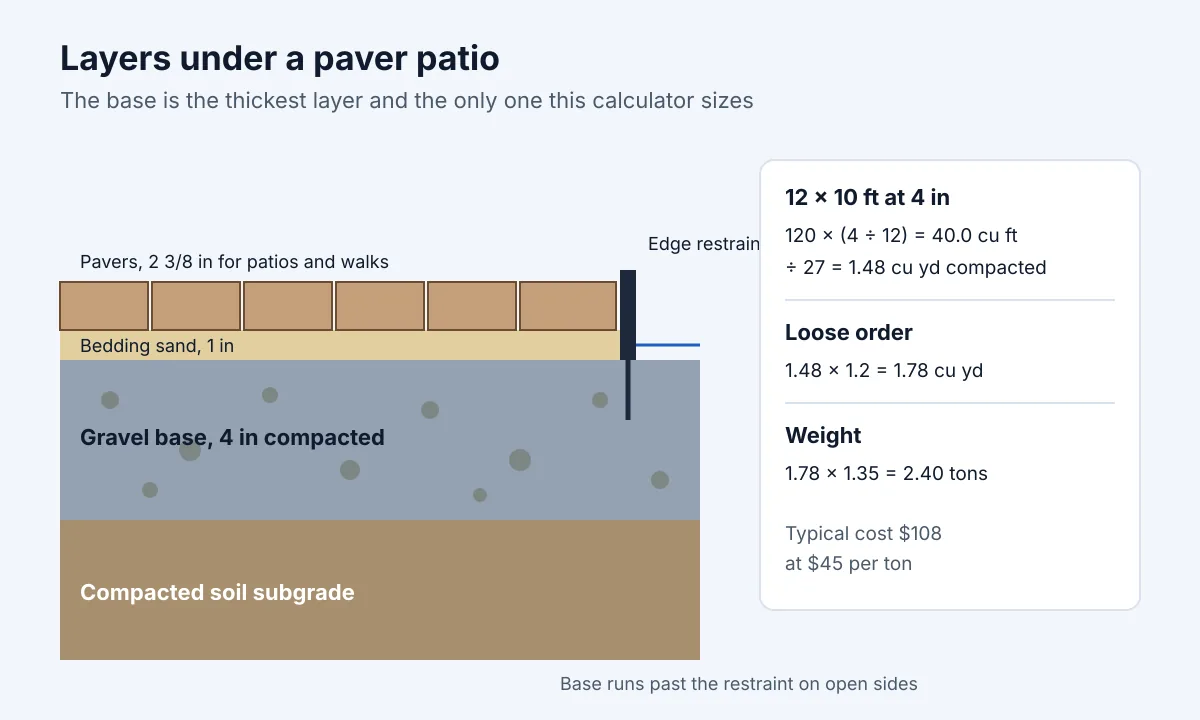
The default patio is 12 by 10 feet, 120 square feet, on a 4 inch base. That gives 40.0 cubic feet, or 1.48 cubic yards once compacted. The loose order is 1.78 cubic yards, and at 1.35 tons per yard it weighs 2.40 tons. Material for that base runs $72 to $156, with $108 as the typical figure.
Depth scales the order in a straight line. Going to a 6 inch base on the same patio raises the order to 3.60 tons, half again as much, with a typical cost of $162. The chart shows the tonnage for every 100 square feet at each depth.

How base work proceeds on site
- Excavation goes down far enough for the base, the bedding sand and the paver thickness, measured below the finished surface.
- The soil at the bottom gets compacted before any gravel arrives. ICPI guidance calls for at least 98 percent of standard Proctor density for patios, walks and residential driveways.
- Geotextile goes down first where the design or soil calls for it, such as next to drains, curbs or soft clay.
- Gravel goes in and gets compacted in lifts. ICPI notes that lift thickness depends on the compactor, with minimum lifts typically 4 to 6 inches, so a deep base is built in two or more passes.
- The finished base gets checked with a straightedge. ICPI allows a tolerance of plus or minus 3/8 inch over 10 feet, since the sand layer above cannot hide larger dips.
- The base carries the surface slope for drainage, so water leaves the patio through the base as well as across the pavers.
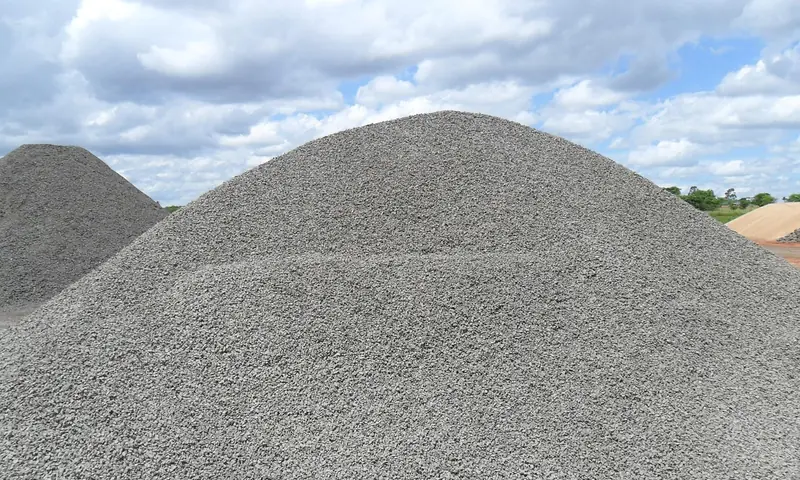
Worked example: an 18 by 22 foot parking pad
A paver parking pad beside a garage measures 18 by 22 feet. Cars will park on it, so the base goes to 6 inches, the low end of the ICPI driveway range.
| Output | Result |
|---|---|
| Base area | 396 sq ft |
| Compacted volume in place | 7.33 cu yd |
| Loose volume to order | 8.80 cu yd |
| Base gravel to order | 11.88 tons |
| Material cost | $356 to $772 (typical $535) |
At 11.88 tons the pad needs a full dump truck delivery rather than a pickup load. A patio base of 4 inches over the same footprint would need 7.92 tons, which is why driveway bases cost noticeably more even before the thicker pavers. The 6 inch base also goes down in two compacted lifts, adding a pass with the plate compactor.
Factors that change the base order
Traffic sets the depth. ICPI lists a minimum aggregate base of 4 to 6 inches for walks and 6 to 8 inches for driveways. Clay soil, poor drainage and frost often push a design toward the deeper end.
Material type moves the price. Dense graded base, the crushed stone with fines that packs hard, is the usual choice. ICPI points to the aggregate used under local asphalt roads, or to ASTM D2940 where no local standard exists. Clean stone without fines drains freely but does not compact the same way, and recycled concrete base is cheaper in many metro areas.
Delivery often costs as much as a small order. Yards charge per trip, and a minimum load can exceed what a small walkway needs. The region setting scales the material price, and in a high cost state the default base becomes $90 to $195.
Overdig adds gravel. An excavation an inch deeper than planned on a 400 square foot pad takes 2.00 tons of extra base to bring back up to grade.
Planning scenarios: Basic, Standard and Premium
| Tier | Surface | Base depth | Loose cu yd | Tons | Material, typical |
|---|---|---|---|---|---|
| Basic | 4 × 36 ft walkway | 4 in | 2.13 | 2.88 | $130 |
| Standard | 12 × 16 ft patio | 4 in | 2.84 | 3.84 | $173 |
| Premium | 20 × 40 ft driveway | 8 in | 23.70 | 32.00 | $1,440 |
The walkway and patio both stay under four tons, a size some yards deliver in a single small truck. The Premium driveway uses the top of the ICPI driveway range and needs 32.00 tons, which usually means more than one truckload and a skid steer to spread it. Its material range is $960 to $2,080 before delivery.
Notes for ordering base gravel
- Product names vary by region: crusher run, road base, dense grade aggregate, class 2 base, 3/4 inch minus and recycled concrete base often describe similar materials.
- A supplier can confirm the weight per cubic yard of a specific product, which can differ from the planning density.
- Bagged paver base from home centers suits only very small jobs, since one ton fills dozens of bags.
- Dump trucks need a firm, clear spot to tip. A tarp on the driveway keeps fines off the concrete.
- A plate compactor rents by the day, and a heavier reversible plate handles deeper lifts.
- Ordering a little extra costs less than a second delivery fee.
Base installation quote checklist
- Base material named, such as dense graded crushed stone, recycled concrete or a local road base
- Compacted depth for walks, patios or driveways, and the lift thickness
- Subgrade compaction and how soft spots are repaired
- Geotextile fabric under the base where soil is clay or wet
- Tons ordered, delivery fees and where the truck tips
- Plate compactor size and the number of passes per lift
- Final grade tolerance and the slope built into the base
- Hauling of excavated soil and cleanup of driveways and streets
Left out of the base estimate
- Delivery fees and minimum load charges
- Excavation and hauling away soil
- Geotextile fabric
- Bedding sand and joint sand
- Compactor rental and labor
- Pavers, edge restraints and drainage work
When the base calls for a professional
Driveways, wet sites and soft soils are where base design matters most. A pad that floods, a slope steeper than a gentle grade or a clay subgrade that stays soft after rain can need a thicker base, drainage pipe or stabilized soil, and a hardscape contractor or engineer can size those.
Utilities come first on any dig. The 811 call service marks buried lines before excavation, and a base 8 inches deep plus pavers and sand puts the bottom of the hole close to shallow cable and irrigation lines.
Equipment carries its own risks. Plate compactors are heavy and vibrate hard, and crushed stone with fines throws dust when dumped and spread dry. Hearing protection, eye protection, steel toe boots and a light misting of the gravel keep the work safer.
Cost data note
Base gravel pricing uses a national band of $30 to $65 per ton, $45 typical, set for October 2026 and reviewed every three months. The 1.2 compaction factor and the 1.35 tons per cubic yard density are planning values in the site configuration, and depth and compaction guidance follows ICPI Tech Spec 10. Delivered prices from a local yard replace these figures for a real order.
Frequently asked questions
How much paver base for a 10 by 10 patio?
2.00 tons at a 4 inch depth. The compacted volume is 1.23 cubic yards, and the 1.2 compaction factor makes the loose order 1.48 cubic yards.
How deep should a paver base be?
4 to 6 inches for patios and walks, and 6 to 8 inches for driveways, per ICPI. Clay soil, frost and standing water are reasons to go deeper.
How many tons of base for 200 square feet?
6.00 tons at a 6 inch depth, or 4.44 loose cubic yards. A 4 inch base on the same area needs two thirds of that.
How many tons are in a cubic yard of paver base?
1.35 tons per cubic yard as a planning figure, so one ton covers about 0.74 cubic yards. Actual weight depends on the stone and its moisture.
Why order more gravel than the hole holds?
Compaction shrinks loose gravel. The calculator adds 20 percent so the base still reaches full depth after the plate compactor packs it down.
Related calculators
- Paver count calculator for the number of pavers and their material cost
- Sand calculator for pavers for the bedding layer that sits on this base
- Slab volume calculator for a poured concrete pad on a similar gravel base
- Footing calculator for the footing under a seat wall or pergola posts beside the patio
Every tool for paved surfaces is grouped on the paver calculators hub, and the paver sealing cost guide covers upkeep once the patio is finished. Hired prices for digging, building the base and laying the pavers appear in the paver installation cost guide.