By Muhammad Awais. Prices reviewed October 2026.
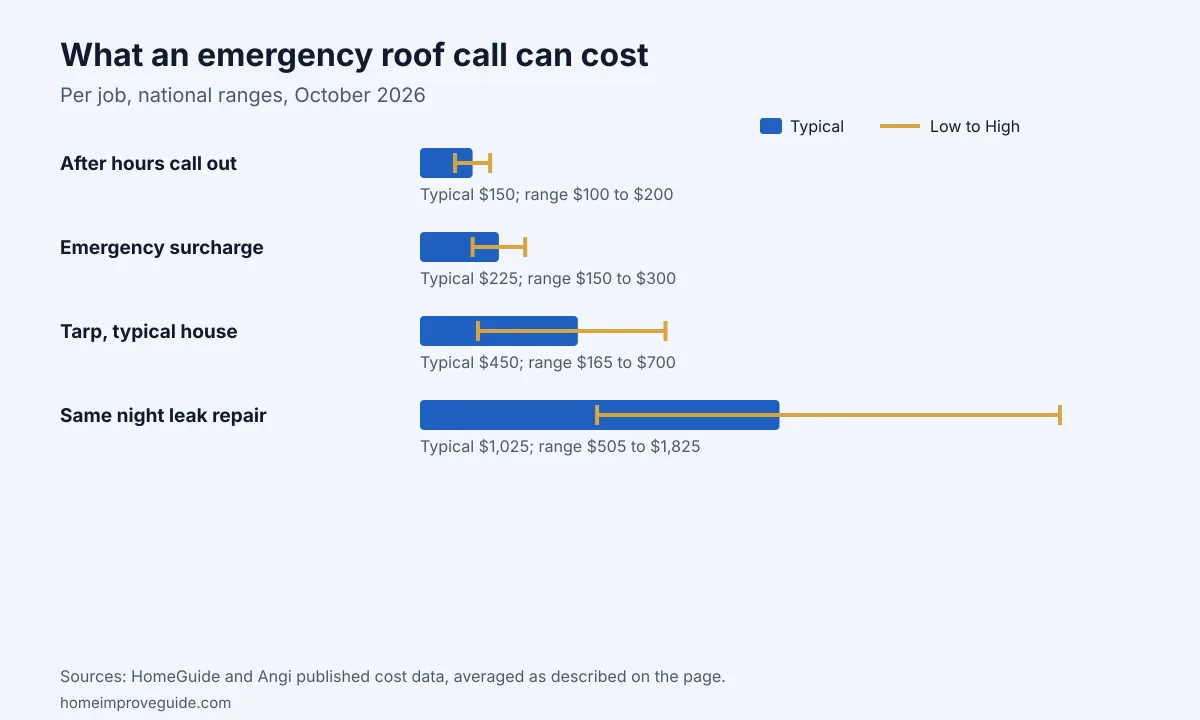
Emergency roof repair adds an urgency charge of $150 to $300 on top of the normal repair price, so a leak fixed the same night runs $505 to $1,825, with $1,025 typical in October 2026. Many calls end with a temporary cover instead: professional tarping costs $165 to $700 for a typical house, or $1.00 to $2.80 per square foot of roof under emergency conditions. An after hours call out fee of $100 to $200 can apply before any work starts.
| Emergency roof cost item | Low | Typical | High |
|---|---|---|---|
| After hours call out fee | $100 | $150 | $200 |
| Emergency surcharge on the repair | $150 | $225 | $300 |
| Professional tarp, typical house | $165 | $450 | $700 |
| Leak repair, done later at normal rates | $355 | $800 | $1,525 |
| Leak repair done the same night, with surcharge | $505 | $1,025 | $1,825 |
What counts as a roofing emergency
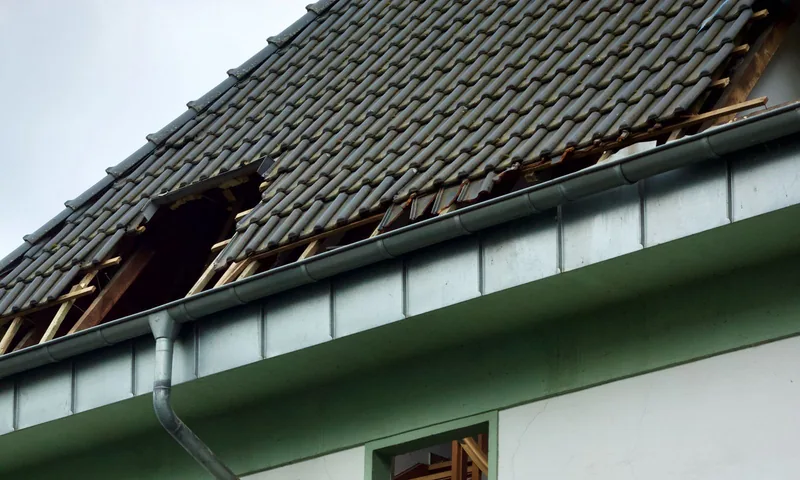
A roof problem becomes an emergency when water or weather is entering the house right now, or when the structure may not hold. Typical cases include a tree limb through the deck, a section of shingles or sheathing torn away in high wind, water pouring through a ceiling light, a skylight broken by hail and a roof plane that has started to sag. A slow drip that appears only in heavy rain can usually wait for a scheduled repair during business hours, which avoids the surcharge entirely.
Tarping by roof pitch
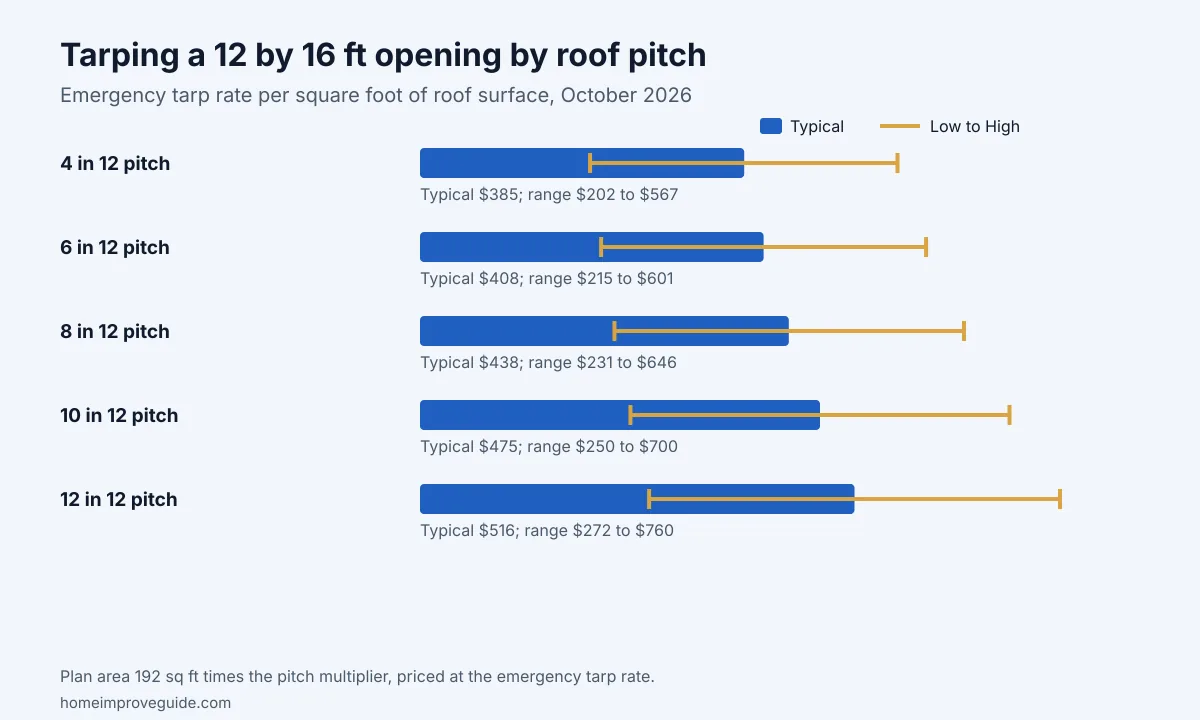
Crews price an emergency tarp by the roof surface it covers, and the cover must reach past the damage and over the ridge so water cannot run under it. A 12 by 16 foot opening on a floor plan covers more roof surface as the slope gets steeper. The table prices that surface at the emergency tarp rate.
| Pitch | Multiplier | Surface over a 12 × 16 ft area | Low | Typical | High |
|---|---|---|---|---|---|
| 4 in 12 | 1.054 | 202 sq ft | $202 | $385 | $567 |
| 6 in 12 | 1.118 | 215 sq ft | $215 | $408 | $601 |
| 8 in 12 | 1.202 | 231 sq ft | $231 | $438 | $646 |
| 10 in 12 | 1.302 | 250 sq ft | $250 | $475 | $700 |
| 12 in 12 | 1.414 | 272 sq ft | $272 | $516 | $760 |
Roof Pitch Calculator: a quick reading from the roof pitch calculator gives the multiplier for any slope, so the tarp area on an emergency invoice can be checked against the size of the damaged section.
What happens on an emergency call
- The crew checks the house for hazards first: sagging ceilings, wet wiring, gas smells and loose debris on the roof.
- Water gets stopped from the outside with a tarp, plastic sheeting battened down with boards, or a quick patch where the opening is small.
- Photos and notes record the damage before and after the temporary cover, which helps with an insurance claim.
- The permanent repair is scheduled for dry weather at normal rates, unless the damage is small enough to finish during the same visit.
Cost factors that raise or lower an emergency bill
- Time of the call. Nights, weekends and holidays bring the urgency charge and often a call out fee. A daytime call on a weekday may cost little more than a scheduled repair.
- Size of the opening and slope. The tarp price scales with roof surface. On the 12 by 16 foot example, a 4 in 12 roof needs 202 square feet of cover against 272 square feet at 12 in 12.
- Area wide storms. After a large storm every roofer in a region has a waiting list, and emergency rates sit near the High column for days.
- Height and access. Two story roofs, steep slopes and yards blocked by fallen trees add setup time and equipment.
- Permanent fix on the same visit. Finishing the real repair during the emergency call costs more per hour but avoids paying for a tarp and a second trip.
- Region. Expect roughly 15 percent less in the lowest cost states and 25 percent more in the most expensive ones.
What a homeowner can do before the roofer arrives
The safe work happens indoors. Moving furniture and electronics away from the drip, setting out buckets, and soaking up water with towels all limit damage. A bulging ceiling can be drained by a small hole at its lowest point with a bucket underneath, which keeps the drywall from collapsing all at once. Power to any wet light fixture or outlet should be shut off at the breaker. Photos of every wet area, with dates, support any insurance claim later.
Climbing onto a roof during a storm is where the real danger lies. Wet shingles, wind and darkness make falls far more likely, and a tarp catches wind like a sail. Tarping is best left to a crew with harnesses and anchors, or done in daylight after the storm has passed by someone experienced with ladders and roof work.
Mistakes that make an emergency more expensive
- Calling only one company after a big storm. Emergency pricing varies widely, and a second call often finds a crew with an earlier opening at a lower rate.
- Paying in full up front. Storm chasers who collect a large deposit and disappear are a known problem after major storms. Payment for the temporary cover should match the work done.
- Leaving the tarp up too long. Sun breaks down tarps and wind loosens them, so water returns. The permanent repair belongs on the calendar right away.
- Skipping the attic. Wet insulation and decking left to dry on their own grow mold, which turns a repair into a remediation job.
Emergency roof repair quote checklist
An emergency invoice is often written fast, so each of these items deserves a line before the crew leaves.
- The call out fee and the urgency surcharge shown separately from the repair
- Square feet of tarp installed and the rate charged per square foot
- How the tarp is fastened, and whether battens or screws went through the shingles
- Photos of the damage taken before the temporary cover went on
- A written scope and price for the permanent repair, quoted at normal rates
- Whether the tarp cost is credited if the same company does the permanent work
- Company name, license number, insurance and a local address
- Payment terms that avoid a large deposit for work not yet done
When a licensed roofer is needed
Any emergency involving structural damage, such as a tree through the roof, broken rafters or a sagging plane, needs a licensed roofer and sometimes a tree service and an engineer before people go back into the affected rooms. Damage near the electrical service drop is a job for the utility first. Permanent repairs that replace decking or a full section usually need a building permit, even when the temporary tarp did not.
Cost data note
Emergency figures combine two published national sources per line where available, using the averaging rule on the methodology page, and they reflect October 2026 prices on a 3 month review cycle. The call out fee comes from a single source. Interior repairs, tree removal and mold work are priced separately.
Frequently asked questions
How much does an emergency roof repair cost?
An emergency leak repair done the same night costs $505 to $1,825, with $1,025 typical. That is the normal repair price plus an urgency charge of $150 to $300.
How much does it cost to tarp a roof after a storm?
Professional tarping costs $165 to $700 for a typical house, with $450 typical. Under emergency conditions crews charge $1.00 to $2.80 per square foot of roof covered.
Does insurance pay for an emergency roof tarp?
Many homeowners policies treat a tarp as a reasonable step to prevent further damage after a covered event such as wind or a fallen tree. Keeping the invoice and photos makes reimbursement far more likely.
How long can a tarp stay on a roof?
A tarp is a short term cover meant to last until the permanent repair. Sun and wind wear it down, so the repair should be scheduled as soon as the weather allows.
Can a roofer fix the leak permanently during the emergency visit?
Small repairs, such as a few shingles or a pipe boot, can often be finished on the spot. Larger damage usually gets a temporary cover first, with the permanent work done in dry weather at normal rates.
More on roof emergencies
Roof tools sit together on the roofing calculators page. Once the cover is on, the guides to repairs after wind and hail, what fixing a leak costs and the signs of roof damage worth checking once the storm passes. All topics appear in the guides section.